
There is a scene early in Wuthering Heights when Mr. Lockwood, the hapless outsider, arrives at the farmhouse in a snowstorm. He is unwelcome and even the fire seems sullen to have him in its company. When the food finally arrives it is lackluster. And yet the kitchen at Wuthering Heights hums with something that no drawing room at Thrushcross Grange could replicate. It’s the sense that every meal has been hard-won from the moors, the fields, and the rivers that surround the property. Every element has been carried inside from the cold once it is ready for harvest. Every meal is cooked over a fire that someone had to stoke before dawn.
Emily Brontë understood kitchens. When the Brontë family’s beloved housekeeper Tabby Aykroyd (the real-life inspiration for Nelly Dean) broke her leg, it was Emily who took over the cooking for the household. She was, by all accounts, the best bread baker in Haworth. She was known for kneading dough with a book propped open on the kitchen table in front of her. She was also an excellent shot with a pistol. She once cauterized her own wound from a dog bite with a hot poker. And she wrote her only novel in the dining room of her father’s parsonage on the edge of the Yorkshire moors. She published it in 1847 under the pen name Ellis Bell. She had to pay £50 out of her own pocket to offset the publisher’s risk and she died of tuberculosis the following December at the age of thirty. She never knew what her book would become.
The critics were appalled. One reviewer wrote that he could not understand how a human being could have attempted such a book without committing suicide before finishing a dozen chapters. Charlotte Brontë, Emily’s sister, later released a second edition in which she tried to soften the damage. She blamed the novel’s wildness on Emily’s rural upbringing and described her as a “nursling of the moors.”
But the wildness was the point. Wuthering Heights is not a love story dressed up in good manners. That’s why, even today, readers (and movie-goers) can’t get enough of it. It feeds that feral part of us we’re told by society to reject. It’s a novel about obsession and ruin and weather. It’s about people who feel things too deeply and break everything they encounter, including other people. And it takes place in a landscape so alive that the moors are practically a character of their own.
This feast belongs to that landscape. Every dish on this table could have been made in a farmhouse kitchen in nineteenth-century Yorkshire, from ingredients dug from frozen ground or foraged from hedgerows or pulled from cold rivers. It’s autumn food, winter food, food for the kind of evening when the wind is throwing rain at the windows and you’ve lit every candle in the house. The soup is dark and earthy. The fish is accompanied by simple ingredients that you would find in Nelly’s farmhouse kitchen. The parsnips are cloaked with a sauce so rich and glossy it borders on reckless. And the chutney, made from cranberries that once grew wild on the Yorkshire moors themselves, is the kind of thing Nelly Dean would have put up in jars and lined along the pantry shelf, ready for the cold months ahead.
This is not a refined dinner. This is a wild gathering of your most feral, and therefore most interesting and beloved, friends.
The Menu
Cocktail: Thrushcross Warming Cup
First Course: Catherine’s Chestnut and Wild Mushroom Soup
Main Course: Thrushcross Grange Fish with Brown Butter, Spinach and Walnuts
Side: Heathcliff’s Parsnips with Whiskey-Glazed Onions
Cheese Course: Nelly’s Cranberry and Apple Chutney with Honey Butter and Oat Cakes


Planning Your Feast on the Moors
Mood, Atmosphere and Overall Aesthetic
Your guests arrive after dark and the house is warm and enveloping. Nothing is brightly lit. There is candlelight, low lamps, a fire lit if you have one, no overhead lighting. The air smells of woodsmoke and something roasting. There is no attempt at perfection here, no polished silver, no matching glassware. This is an evening that feels like a throwback to a time long ago, as if gatherings have been happening in this room for a hundred years. The aesthetic sits somewhere between a Yorkshire farmhouse and a Gothic novel, which is, of course, exactly where Wuthering Heights lives.
If you have a fireplace, light it. If you do not, cluster candles in dark corners until they glow in amber light. The mood should feel sheltered, as though your dining room is the only warm place for miles and the darkened moors are pressing in at the windows. Think heavy curtains in deep, earthy tones drawn tightly closed against the wind, thick blankets folded over the backs of chairs. It’s the kind of atmosphere that makes people lean in, lower their voices, and seek warmth and solidarity.
Invitations
Write or print your invitations on heavy, dark card stock in cream or white ink. Keep the language spare and atmospheric. Something like: “You are invited to dine at the edge of the moors. Dress warmly. Come hungry. The wind will be at your back.” If you are sending digitally, pair the text with an image of the Yorkshire moors in fog, or the silhouette of a lone farmhouse on a hill. Avoid anything that references the recent film adaptation. This feast belongs to the novel and to the landscape that inspired it.
Beverages
The evening begins with the Thrushcross Warming Cup (recipe below), a hot Scotch toddy steeped with thyme and honey that will take the chill off your guests and set the tone for everything that follows. Offer it as they arrive, in small mugs or heatproof glasses, with a sprig of thyme for garnish
For wine, serve a robust red throughout dinner. A Northern Rhône Syrah has the dark fruit and peppery warmth that suits this menu perfectly, or look for a Malbec or a Rioja Reserva. If you can find a wine from a Yorkshire vineyard, all the better for the story it tells at the table.
For a non-alcoholic option, steep fresh thyme, a cinnamon stick, sliced apple and a few bruised cranberries in hot apple cider and serve it warm. This echoes the cocktail and honours the hedgerow foraging tradition of the moors, where sloe berries, elderberries, rosehips and wild cranberries were gathered from the landscape and turned into cordials, jellies and warming drinks for the cold months.
Yorkshire tea should also make an appearance, served strong, with milk, in sturdy mugs. Offer it after the cheese course as the evening winds down. It is not a garnish to this meal. It is as essential to the Yorkshire table as anything else on it.
Dress Code
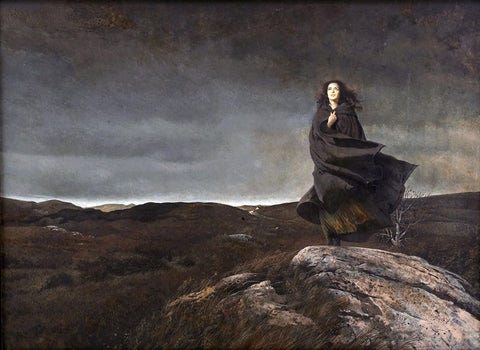
Invite your guests to dress for a blustery evening on the moors, interpreted however loosely they like. Dark colours, layered textures, wool, velvet, linen. Suggest boots rather than heels, and scarves rather than jewellery. The look is windswept and a little Romantic (capital R). If anyone arrives looking like they could walk across a moor in the rain and still be beautiful, they have understood the assignment.
Decorations
Less is more, and what there is should feel gathered rather than purchased. If you can find bare branches, dried heather, or late-autumn foliage, arrange them loosely in stoneware jugs or simple glass bottles along the centre of the table. Scatter a few whole walnuts and small apples among them. Beeswax candles in dark holders, or even in empty glass jars, will give you the right light.
If you are feeling ambitious, place a few old hardback books along the table, their spines facing the guests. They do not need to be copies of Wuthering Heights, though one should be. Any well-worn, cloth-bound book will do. Stack them in twos or threes between the candles. It is a small touch, but it grounds the evening in the literary world that inspired it.
Avoid anything too polished, too matching, or too obviously “themed.” This is not a costume party. It’s a mood.
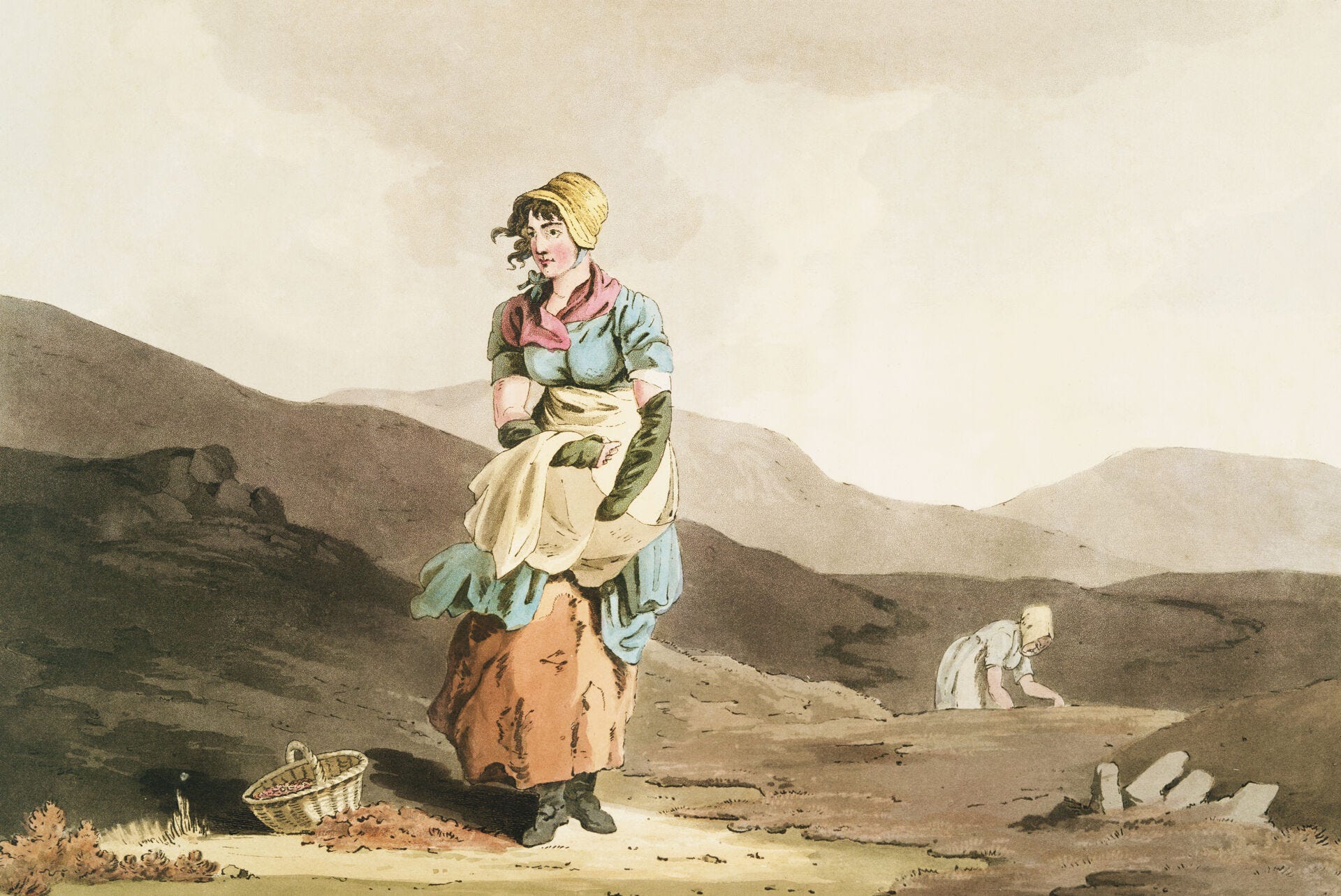
Table Settings
Earthenware, stoneware, or heavy ceramic plates in dark or muted tones are ideal. Mismatched is welcome. If you have handmade pottery, use it tonight. Linen napkins in charcoal, slate, cream or deep burgundy, folded simply or tied with twine. Use heavy cutlery if you have it. If you own a set of old family silverware that never comes out, this is the evening for it. Serve the soup in deep bowls, the fish on wide plates, and the parsnips in a single large dish set in the middle of the table for guests to serve themselves. The chutney should arrive in its jar, with the oat cakes fanned on a board beside the honey butter and a wedge of hard cheese.
Music
Build a playlist that feels like the landscape: vast, atmospheric, and unhurried. Start with ambient or neo-classical pieces during the cocktail hour. Composers like Max Richter, Ólafur Arnalds and Nils Frahm create the right sense of open space and gathering weather.
As dinner progresses, you might weave in traditional English and Celtic folk music, keeping it acoustic and spare. Artists like Sam Lee, Shirley Collins, or Martin Carthy carry the right weight. If you know the Kate Bush song (and you do!), save it for the end of the evening. It is the only pop song that has ever done justice to this novel, written when Bush was just eighteen years old and sharing a birthday with Emily Brontë herself, exactly 140 years apart.
Entertainment
Place a copy of Wuthering Heights somewhere visible, perhaps propped open on a side table near the entrance. Before or after dinner, read aloud a short passage from the novel. Choose something visceral and atmospheric rather than plot-heavy. The opening pages, in which Lockwood describes the farmhouse and the wild landscape around it, are perfect. So is Catherine’s famous speech about her love for Heathcliff being like the rocks beneath the earth. Let it hang in the air for a moment, then move on. Do not over-explain.
If your guests are readers, you might invite each person to name the fictional meal they would most want to attend. This is, after all, the premise of Fantasy Feasts, and the answers people give are always surprising, revealing, and fun. It’s a conversation that tends to last far longer than you expect.
For a more tactile element, set out a small board of foraged or seasonal items for guests to smell and taste: sprigs of fresh thyme, a jar of heather honey, toasted walnuts, a sliced apple. Talk about the landscape of the novel and the foods that would have come from it. It’s a reminder that the moors are not barren. They are full of life if you know where to look.
Party Favors
Send your guests home with a small jar of the cranberry and apple chutney, tied with twine and labelled by hand. If you have made extra honey butter, wrap a small portion in wax paper and tuck it in alongside. A printed recipe card for the Thrushcross Warming Cup is a lovely addition, so they can recreate the drink at home the next time the weather turns cold. Or offer a simple bookmark made from card stock, printed with a line from the novel.
“I have dreamt in my life, dreams that have stayed with me ever after, and changed my ideas; they have gone through and through me, like wine through water, and altered the color of my mind. And this is one: I'm going to tell it - but take care not to smile at any part of it.”
― Emily Brontë, Wuthering Heights
My newsletter is reader-supported.
Free subscribers get limited access to the weekly newsletter and two weeks worth of archives.
Paid subscribers get complete access to all of the content in my newsletters and my entire archives. You’ll also get all of the recipes, guides, interviews, cooking tips, essays and more, plus the ability to comment and participate in discussions.
Newsletters will arrive right in your Inbox or you can read them through the app.
Recipes for the Feast on the Moors
Every dish on this table could have been made in a farmhouse kitchen in nineteenth-century Yorkshire. Parsnips dug from frozen ground. Cranberries gathered from the moors. Chestnuts foraged from the woods. Fish pulled from cold rivers. It is wild, comforting, and without pretense.


Thrushcross Warming Cup
This is the drink that greets your guests at the door, the thing that tells them the evening has started and the cold can stay outside. It’s named for Thrushcross Grange, the gentler of the two houses in the novel. It’s the one with the warm hearth and the enviable wine cellar. A Scotch toddy at its heart, it’s steeped with fresh thyme (which grows wild across the Yorkshire moors) and sweetened with honey. If you can find heather honey, the floral, almost smoky depth it brings is extraordinary and deeply tied to this landscape. A few thin slices of apple bridge the cocktail to the chutney that will close the meal, tying the whole evening together in a single, considered thread. Serve it warm, not scalding, in small mugs or heatproof glasses, and let your guests wrap their hands around it.
Serves 4 Prep Time: 5 minutes Cook Time: 10 minutes
Ingredients:
2 cups / 480 ml hot water
4 sprigs of fresh thyme, plus more for garnish
4 oz / 120 ml Scotch whiskey
4 tbsp honey (heather honey if you can source it)
4 tsp fresh lemon juice
1 small apple, thinly sliced, for garnish
Method:
Bring the water to a boil, then remove from the heat. Add the thyme sprigs and let them steep for five minutes to infuse, as you would a tea.
Divide the whiskey, honey and lemon juice evenly among four mugs or heatproof glasses. Pour the thyme-infused water over the top, straining out the thyme sprigs. Stir gently to dissolve the honey.
Garnish each drink with a fresh sprig of thyme and a thin slice of apple. Serve immediately, while still warm.
Catherine’s Chestnut and Wild Mushroom Soup

Catherine Earnshaw is a creature of contradictions. She belongs to the moors and she also belongs to the drawing room. She is feral and refined, tender and destructive, all at once. This soup is hers. It begins in the earth, with wild mushrooms and chestnuts, ingredients that could have been foraged from the woods around Thrushcross Grange on a damp October afternoon. But then it becomes something else entirely: a splash of dry sherry, a grating of nutmeg, a swirl of cream sharpened with sour cream so it never tips into sweetness. Blend it until it is almost smooth but not quite, because this is not a soup that should look like it could be made of anything. You want to know what’s in it. You want it to feel a little wild. Serve it with warm, crusty bread and softened butter.
Serves 4 Prep Time: 15 minutes Cook Time: 35 minutes
Ingredients:
2 tbsp unsalted butter
4 shallots, thinly sliced
2 garlic cloves, finely grated
1 celery rib, thinly sliced
2 cups / 200 g wild mushrooms (such as chanterelle, porcini, or oyster), roughly chopped (baby bellas work well if wild mushrooms are hard to source)
2 cups / 280 g jarred or vacuum-packed cooked chestnuts
4 cups / 960 ml vegetable stock
½ cup / 120 ml heavy cream
¼ cup / 60 ml sour cream
2 tbsp dry sherry
¼ tsp freshly grated nutmeg
Salt and freshly ground black pepper, to taste
Fresh thyme leaves, for garnish
For the drizzle:
½ cup / 120 ml heavy cream
¼ cup / 60 ml sour cream
Method:
Melt the butter in a large heavy-bottomed pot over medium heat. Add the sliced shallots and cook, stirring occasionally, until soft and translucent, about five minutes. Add the garlic and celery and cook for another two minutes until tender and fragrant.
Add the mushrooms and cook for six to eight minutes, stirring every so often, until they have released their liquid and begun to take on colour. Add the chestnuts. Stir for two more minutes.
Pour in the vegetable stock, turn the heat up to high, and bring to a simmer. Reduce the heat to medium and gently simmer until the chestnuts are very soft and beginning to break apart, about 25 to 30 minutes.
Remove from the heat. Stir in the cream, sour cream, sherry and nutmeg. Season generously with salt and pepper. Once the soup has cooled for 10 minutes, using an immersion blender (or transferring in batches to a stand blender), carefully blend the soup until mostly smooth, but with some texture remaining. If you prefer a smoother consistency, strain the soup through a fine-mesh sieve after blending.
Return the soup to low heat if needed to warm through. Taste and adjust the seasoning.
For the drizzle, whisk together the cream and sour cream until smooth and pourable.
Ladle the soup into bowls, finish with a generous swirl of the cream drizzle, and a scattering of fresh thyme leaves. Serve with crusty bread and softened butter.
Heathcliff’s Parsnips with Whiskey-Glazed Onions
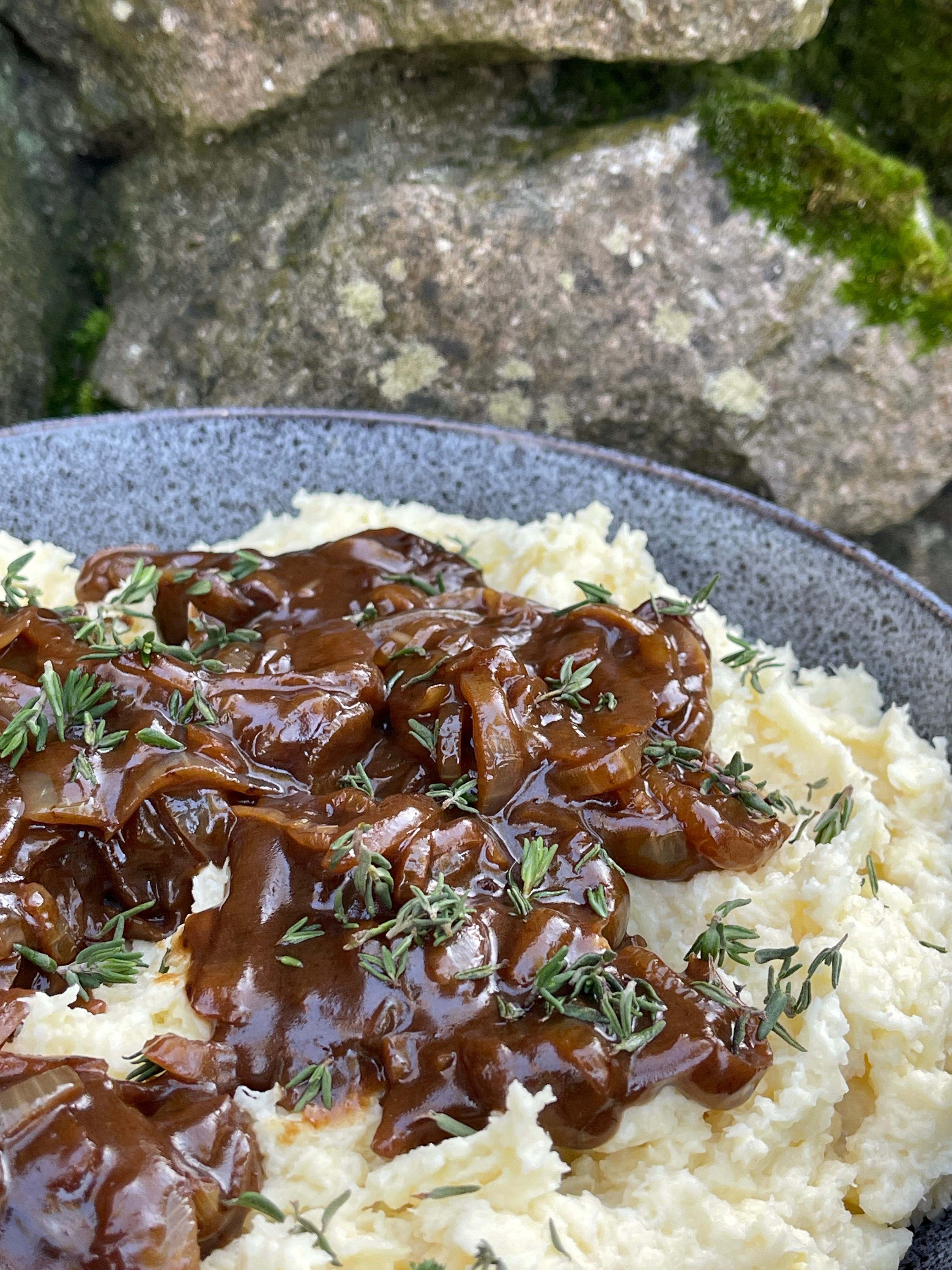
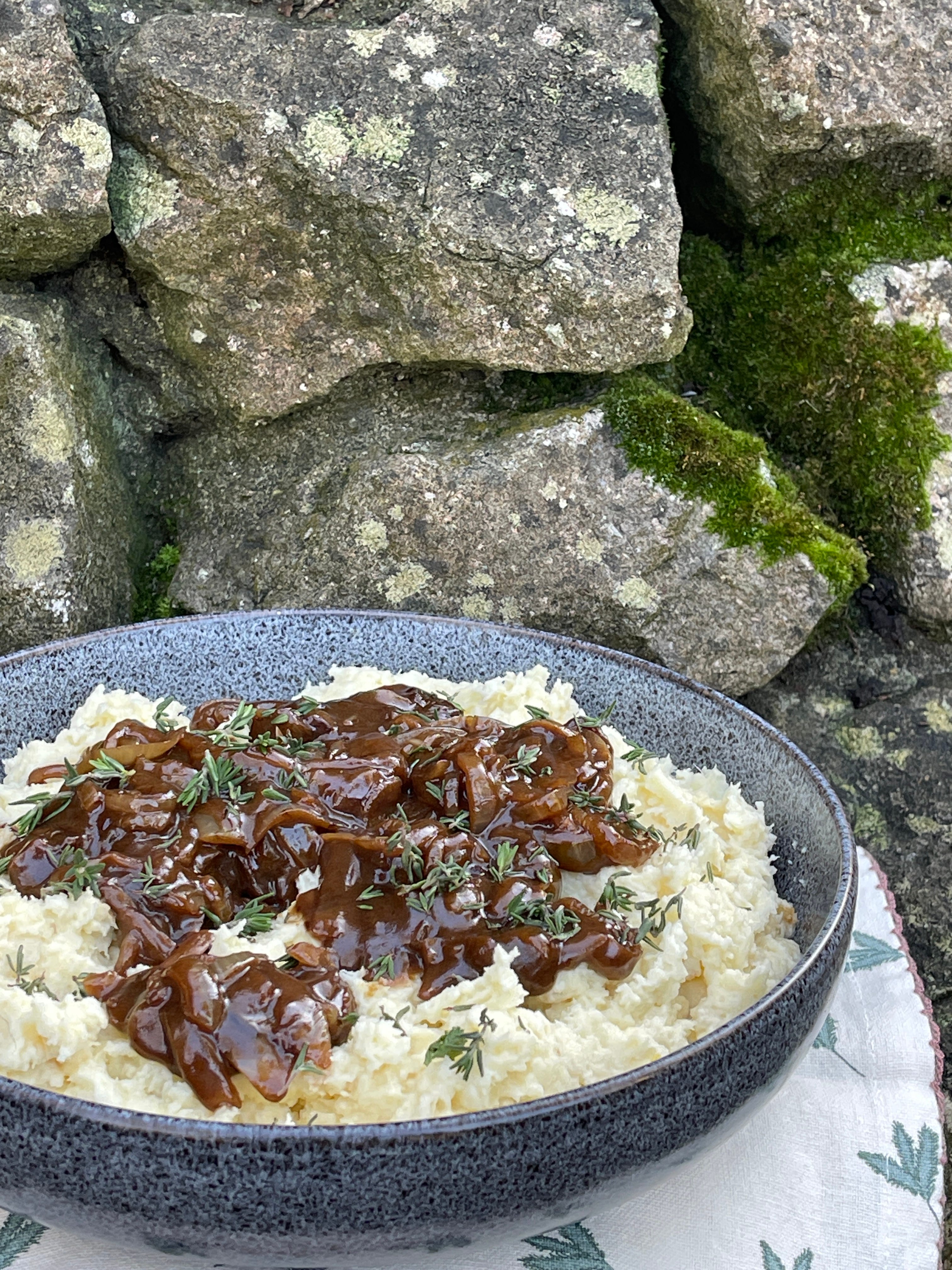
If there is a dish on this table that belongs to Heathcliff, it is this one. It’s not polished or conventionally pretty and it’s definitely not trying to impress anyone at Thrushcross Grange. Parsnips were considered poor man’s food in nineteenth-century Yorkshire. They were dug from the frozen ground and roasted over an open-fire. When mashed with enough butter and cream, they become sweet and earthy and velvety-smooth, with a depth of character that potatoes never quite reach. And when cloaked under this rich, glossy, whiskey-laced sauce, the mashed parsnips are transformed into something slightly more refined that Heathcliff would still permit to be served on his table.
Serves 4 Prep Time: 20 minutes Cook Time: 50 minutes
For the parsnip mash:
6 medium parsnips, peeled and sliced into even rounds
4 garlic cloves, unpeeled
2 tbsp olive oil
4 tbsp / 55 g unsalted butter
⅓ cup / 80 ml heavy cream (or plant-based cream)
Salt and freshly ground black pepper, to taste
For the whiskey-glazed onions:
2 tbsp unsalted butter
3 medium yellow onions, halved and thinly sliced
¼ cup / 60 ml Scotch whiskey
1½ cups / 360 ml mushroom stock (or beef stock, if preferred)
¼ cup / 55 g cold unsalted butter, cut into small cubes
3 to 4 sprigs of fresh thyme, leaves stripped, plus more for garnish
Salt and freshly ground black pepper, to taste


Method:
Preheat the oven to 400°F / 200°C. Spread the parsnip rounds and garlic cloves on a baking sheet, drizzle with olive oil, and season with salt and pepper. Toss to coat. Roast for 25 to 30 minutes, turning once, until the parsnips are golden and tender and the garlic is soft and fragrant.
While the parsnips roast, start the onions. Melt 2 tablespoons of butter in a heavy-bottomed pan over medium-low heat. Add the sliced onions and cook slowly, stirring occasionally, for 25 to 30 minutes until they are deeply caramelized and dark. This step requires a bit of patience but it’s worth it as the onions release their sweetness as they caramelize.
When the onions are ready, increase the heat to medium and pour in the whiskey. Let it bubble and reduce for about a minute, scraping up any sticky bits from the bottom of the pan. Add the mushroom stock and half of the thyme leaves. Bring to a simmer and cook for 10 to 12 minutes, until the liquid has reduced by about half.
Lower the heat and begin adding the cold butter cubes one or two at a time, stirring continuously. Wait for each addition to melt and incorporate before adding the next. This is what gives the sauce its glossy, velvety finish. Reduce the sauce down until it is thickened and gleaming. Season with salt and pepper. Keep warm.
When the parsnips are done, squeeze the roasted garlic from its skins and add it to a large bowl with the parsnips, butter and cream. Mash until smooth but still with some texture. Season generously with salt and pepper.
Spoon the parsnip mash into a wide serving bowl. Ladle the whiskey-glazed onions over the top and finish with a scattering of fresh thyme leaves. Serve immediately.
Thrushcross Grange Fish with Brown Butter, Spinach and Walnuts
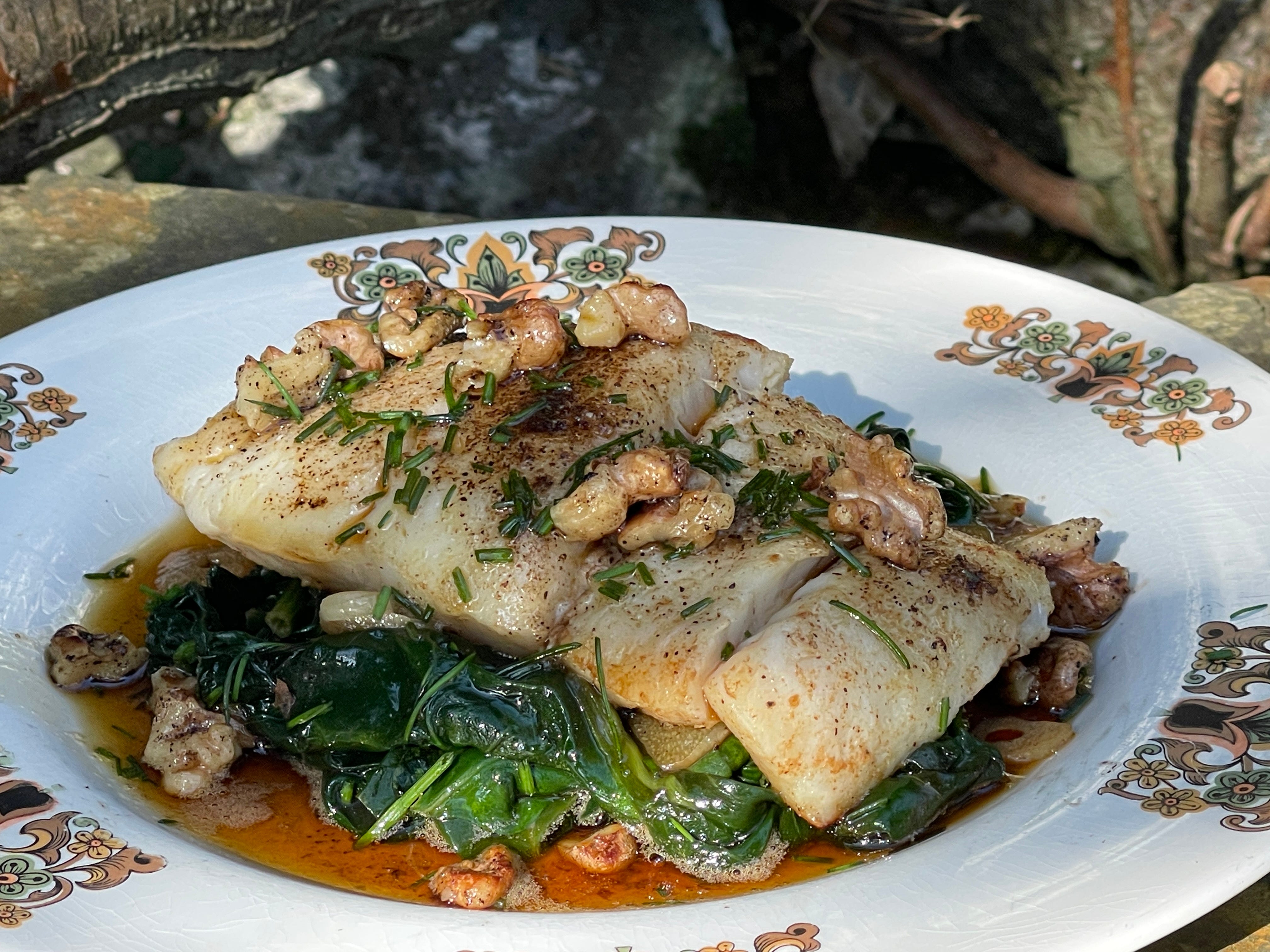
This is the dish that comes from the other house. Where the Earnshaw kitchen is all rough warmth and survival, the Lintons dine with silver and candlelight, and this is their kind of recipe. A firm white fish, seared in butter until golden brown and finished with a splash of apple cider vinegar for brightness. It’s set on a bed of garlicky wilted spinach, and then then everything is drenched in brown butter so deep and nutty it smells like October. Toasted walnuts scattered over the top give it crunch and a handful of chives finishes it with colour. It looks like a restaurant dish but it comes together in one pan in under twenty minutes. Cod is what I use here, but haddock, hake, pollock, or any firm white fish with thick fillets will work well. The key is not to rush the brown butter. Let the milk solids turn properly golden and the kitchen fill with that toasted, almost caramel smell before you pull it off the heat. That patience is the difference between good and unforgettable.
Serves 4 Prep Time: 10 minutes Cook Time: 15 minutes
Ingredients:
4 cod fillets (about 6 oz / 170 g each), or 2 large fillets cut in half, skin removed, patted dry
5 tbsp unsalted butter
2 tsp apple cider vinegar or fresh lemon juice
3 garlic cloves, thinly sliced
1 large bag (about 10 oz / 280 g) fresh baby spinach leaves
3 tbsp fresh parsley, roughly chopped
⅓ cup / 40 g walnut halves
Salt and freshly ground black pepper, to taste
Fresh chives, finely snipped, for garnish


Method
Season the fish fillets generously with salt and pepper on both sides.
Melt 2 tablespoons of butter in a large skillet over medium-high heat. When the butter is foaming, lay the fillets in the pan and sear without moving them for three to four minutes, until the underside is golden. Flip the fish carefully using a spatula, add the apple cider vinegar or lemon juice to the pan, and spoon the liquid over the fillets several times as they finish cooking, another two to three minutes depending on thickness. Transfer the fish to a plate and tent loosely to keep warm.
In the same pan, add the sliced garlic and sauté over medium heat until just light golden brown, about a minute. Be careful not to let it burn. Add the spinach and parsley, season with salt and pepper, and cook, turning with tongs, until the spinach is just wilted. Transfer the spinach and garlic to a serving platter or divide among plates, leaving the pan on the heat.
Add 3 tablespoons of butter to the now-empty pan over medium heat. Let it melt and begin to foam. Watch it carefully as the milk solids begin to separate and toast. You will see the fats separating and the butter turning from pale gold to a deep amber. Let it go until it smells nutty and sweet, then immediately remove the pan from the heat and pour the brown butter into a small bowl.
Return the pan to medium heat. Add the walnuts and toast them in the residual heat for one to two minutes, tossing frequently, until fragrant and lightly browned.
To serve, arrange the spinach on plates or a platter. Place the fish on top. Spoon the brown butter generously over the fish. Scatter the toasted walnuts and snipped chives over everything. Serve immediately.
Nelly’s Cranberry and Apple Chutney with Honey Butter and Oat Cakes
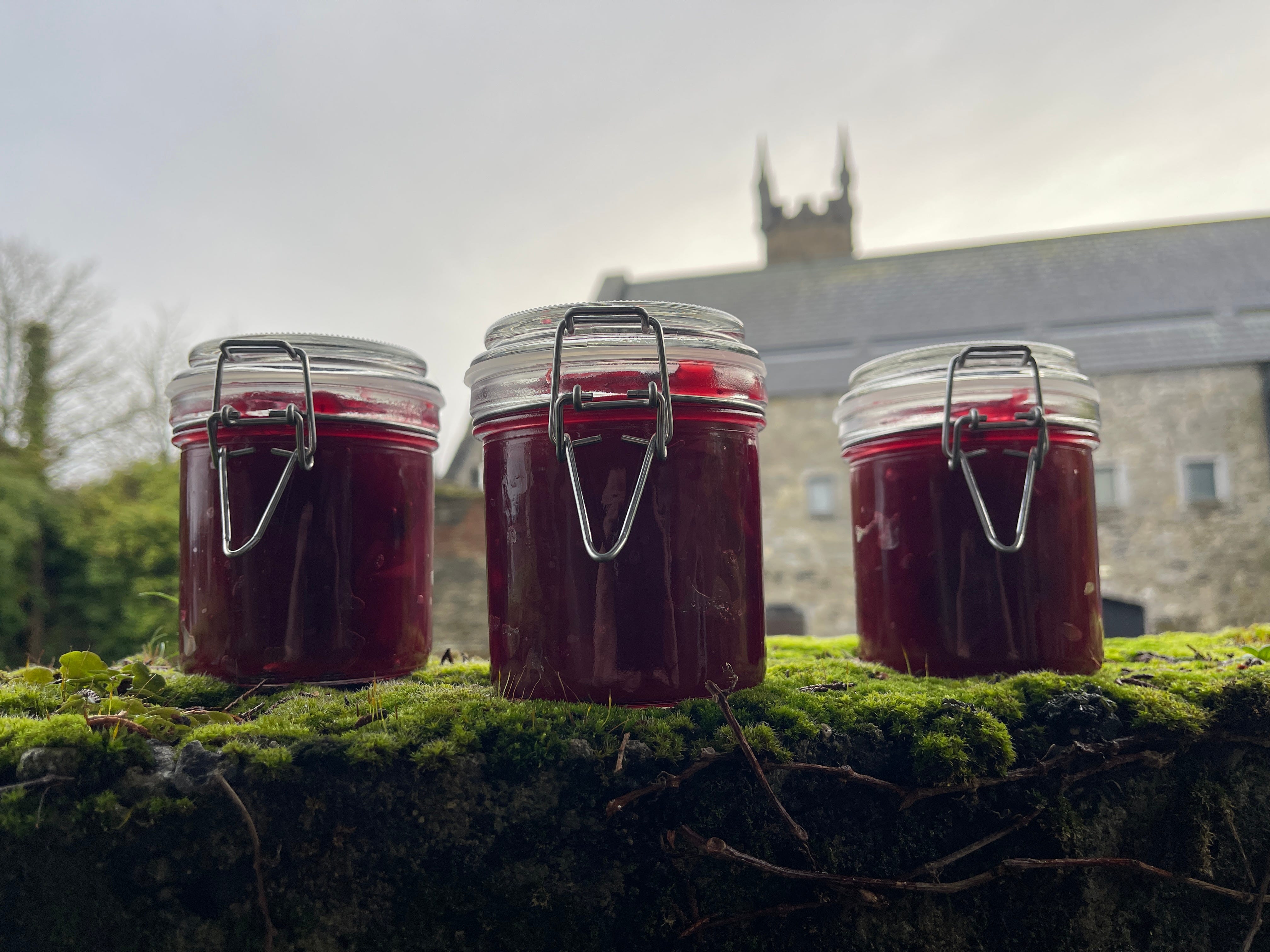
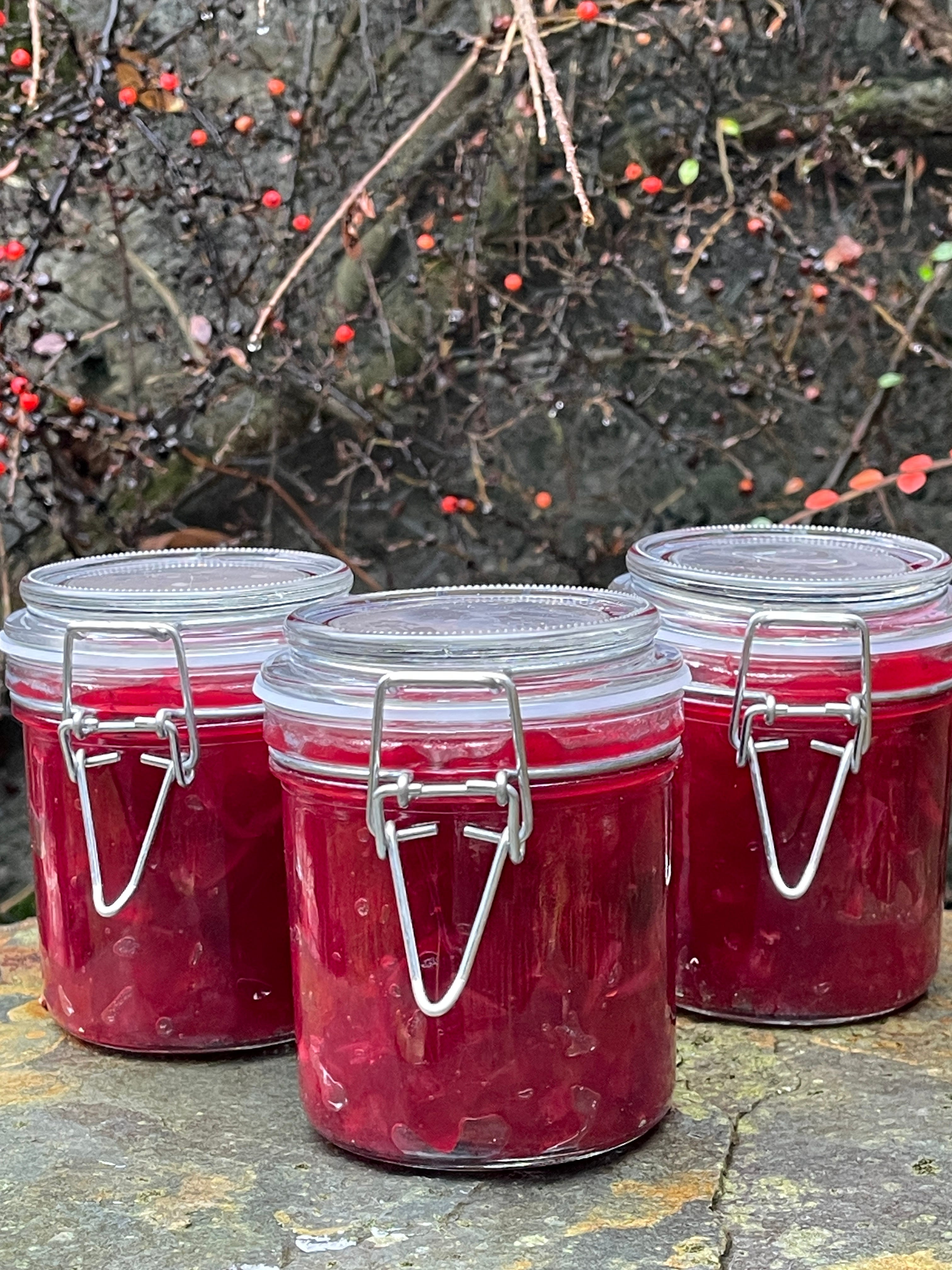
Every household in fiction has someone who actually keeps things running, and in Wuthering Heights, that person is Nelly Dean. She is the one who lights the fires, who boils the water, who feeds people whether they deserve it or not. While Catherine rages and Heathcliff broods and the wind tears across the moors, Nelly is in the kitchen. This is her kind of recipe: patient, practical, and deeply satisfying. A good chutney asks very little of you beyond a bit of stirring and a willingness to let time do its work.
What Americans may not know is that cranberries are not the transplanted New World ingredient they might assume. A wild European species, Vaccinium oxycoccos, grew abundantly across the bogs and peat fens of northern England for centuries. In 1814, the artist George Walker published an illustration of a young woman gathering cranberries on the Yorkshire moors, the very landscape Emily Brontë would later make immortal. Walker noted that while larger cranberries were imported from Russia and America, the English berries were superior in flavor. This chutney belongs to that landscape as surely as the heather does.
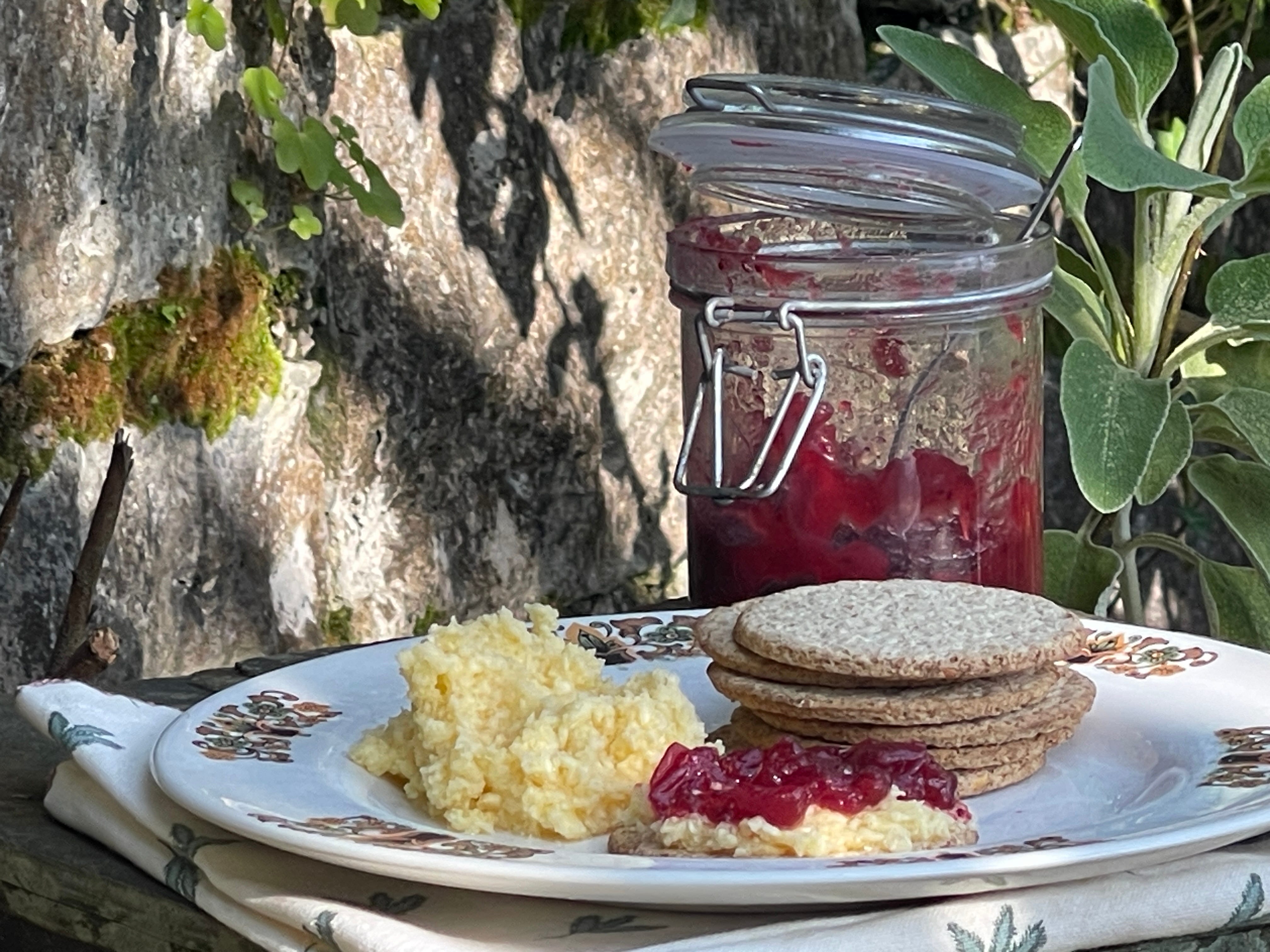
The oat cake, too, deserves a mention. For anyone unfamiliar, oat cakes are one of the oldest foods in the British Isles, a sturdy, nutty flatbread made from oats and not much else. They predate wheat-flour baking in northern England and Scotland by centuries, and they would have been as common on the Earnshaw table as bread is on yours. Spread with honey butter and topped with this chutney, they become something quite extraordinary. A good sharp cheddar or crumbly Wensleydale alongside would not be unwelcome, and would make this a proper final course.
Makes approximately 3 cups of chutney Prep Time: 20 minutes Cook Time: 35 to 40 minutes
Ingredients:
For the chutney:
1 tbsp butter
1 medium red onion, finely chopped
12 oz / 340 g fresh cranberries (one standard bag)
3 medium red eating apples (such as Braeburn, Fuji or Pink Lady), peeled, cored and coarsely chopped
¾ cup / 150 g demerara sugar
2 tbsp apple cider vinegar
1 tbsp fresh ginger, finely grated
2 cinnamon sticks
2 whole star anise
6 whole cloves
Salt and freshly ground black pepper, to taste
For the honey butter:
4 oz / 115 g unsalted butter, softened
2 tbsp honey (heather honey if you can find it)
Crunchy sea salt, such as Maldon, to taste


Method:
Heat the butter in a heavy-bottomed saucepan over medium heat. Add the diced red onion and sauté, stirring occasionally, until softened and translucent, about five minutes.
Add the cranberries, apple, demerara sugar, apple cider vinegar, and ginger. Stir to combine. Tuck in the cinnamon sticks, star anise and cloves. Season with salt and pepper.
Bring the mixture to a gentle simmer, then reduce the heat to medium-low. Cook, stirring occasionally, for 30 to 35 minutes. The cranberries will begin to burst after about ten minutes, and the apples will soften, break down, and help to thicken the chutney because of their pectin. The chutney is ready when it has thickened to a glossy, jammy consistency and the liquid has mostly cooked off. Taste and adjust the seasoning, adding more sugar if you prefer it sweeter or a splash more vinegar if you want a sharper edge.
Remove from the heat and allow to cool in the pan. Remove the cinnamon sticks, star anise and cloves. Transfer to clean, sterilized jars. The chutney will keep in the refrigerator for up to a month. It improves after a day or two as the flavors deepen.
For the honey butter, combine the softened butter and honey in a small bowl and beat with a fork until smooth and well blended. Finish with a generous pinch of crunchy sea salt. Serve at room temperature.
For the oat cakes:
Oat cakes are widely available in stores throughout the UK and Ireland but just like nearly anything, they’re even lovelier when homemade.
Makes about 16 oat cakes Prep Time: 10 minutes Cook Time: 15 minutes
Ingredients:
1½ cups fine oatmeal (not rolled oats)
¼ tsp fine sea salt
¼ tsp baking soda
1 tbsp butter, melted
⅓ cup hot water, plus more as needed
Method:
Preheat the oven to 375°F / 190°C. Line a baking sheet with parchment paper.
Combine the oatmeal, salt and baking soda in a mixing bowl. Pour in the melted butter and hot water. Stir until the mixture comes together into a firm but workable dough. If it feels too dry, add hot water a teaspoon at a time.
Turn the dough out onto a surface dusted with oatmeal. Roll it out as thin as you can manage, about ⅛ inch thick. Cut into rounds with a biscuit cutter or the rim of a glass, or into rough squares with a knife. Gather and re-roll the scraps.
Place on the prepared baking sheet and bake for 12 to 15 minutes, until the edges are just beginning to colour and the oat cakes feel firm to the touch. They will crisp further as they cool. Transfer to a wire rack.
Serve the oat cakes with the honey butter and chutney, and if you like, a wedge of good cheddar or crumbly Wensleydale.
Thank you for reading! If you enjoyed this feast, please share it with the book lovers, cooks, and gatherers in your life. Next week, another world. Another table. Another invitation to step inside a fantasy feast story.
Fantasy Feasts is a weekly series by cookbook author Jody Eddy, featuring step-by-step plans to host the most unforgettable meals from your favourite books, television shows and movies. Each feast includes a full menu of original recipes, a hosting guide with atmosphere and décor ideas, and the storytelling that connects the food to the world it comes from. From Tolkien to Miyazaki, from Dickens to Dune, there is a feast for every reader, viewer and gatherer.
New feasts publish every Friday or Saturday on What’s Good Here, Jody’s weekly newsletter. Subscribe for free to get every feast delivered to your inbox.
Let’s Talk!
Please join the What’s Good Here community by posting a comment or to just say hello to get the conversation started!
Image attributions throughout the newsletter are attributed to Jody Eddy, unless otherwise noted.
If you would like to learn more about me and discover what I will deliver to you each week through this newsletter, you can find that information here or check out my Instagram or website.
Loved the novel, felt *differently* about the new film, love this. It’s a gorgeous menu and such a fun idea!