
Masopust: the 700 year old Czech festival that refuses to be commercialized
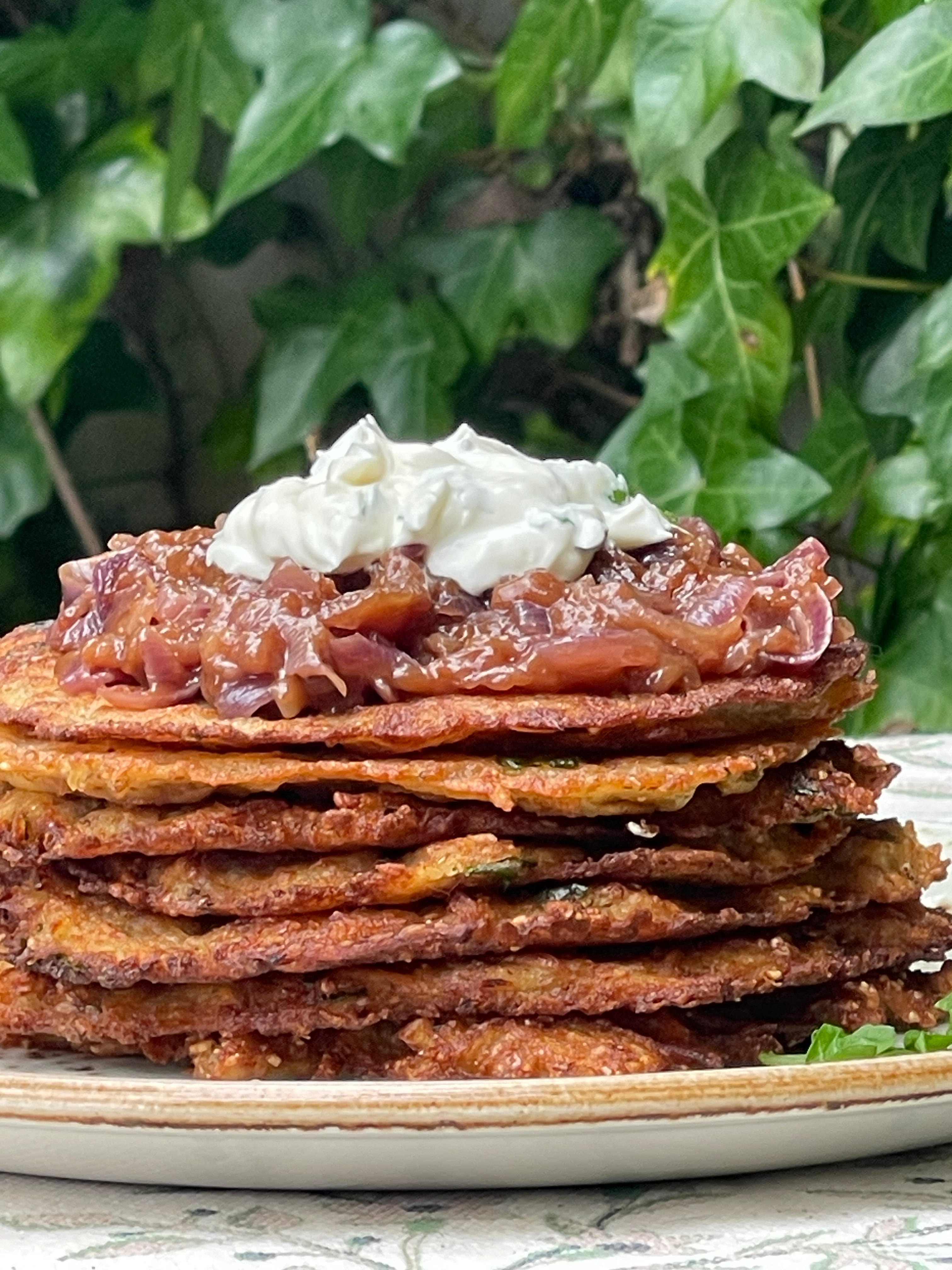
plus Bramboráky (Czech garlic potato pancakes) with beer-caramelized onions and herbed cream
There is a moment, somewhere between the third glass of mulled wine and the appearance of a man dressed as a bear dancing with a king wearing a crown of garlic bulbs, when you understand that the people celebrating Masopust are not performing for the tourists like so many others in this enchanting but tourist-saturated city do. They don’t care if you have a camera. And they’re not trying to entice you into their gift shop.
I discovered Masopust during my years living in Prague. I learned about it by happenstance on a cold, and rather bleak, February afternoon. Someone at the coffee shop told me to walk up to Prague Castle as soon as I could. They said with some urgency to hurry up and get there. They promised it would be worth it. So I bundled up to face a winter’s day that held the chill like metal in the freezer.
I marched up the hill, my breath emerging in grey-white puffs as I trudged along the steep incline. And just as I reached the top, the parade came tumbling down the hill like something sprung from a medieval woodcut: devils and butchers, straw men and death figures, a brass band playing polkas that bounced off the Baroque facades of Nerudova Street.


A stranger pressed a hot koblihy, a golden, jam-filled doughnut dusted in powdered sugar, into my hands. A woman in a fur-trimmed cloak offered me a cup of svařák, Czech mulled wine fragrant with clove and cinnamon, and waved away my attempt to pay. “It’s Masopust,” she said. As if that explained everything.
A man dressed like a vintage police officer with comical red cheeks painted on his face sat in a little shop on wheels handing out coffee, hot wine, bowls of boiled potatoes slathered in caramelized onions, and thick slices of lovecký salám, hunter’s sausage that is chewy and intensely smoked. Another man passing by dressed like a nun poured me a tiny glass of Becherovka, a slightly bitter Czech herbal liqueur that tastes of ginger, cinnamon, and Christmas.
There were women dressed like mushrooms straight out of your favorite gnome fairytale and children with red-painted cheeks wearing hats made of vibrant fabric flowers playing accordions in between stuffing koblihy into their mouths. There were blue and yellow ribbons and flags to show solidarity for Ukraine, there was quite a bit of weaving from all the morning drinking, and there was an irresistible festiveness that was impossible to resist.


A Seven Hundred Year Old Party
Masopust, the word translates roughly to “farewell to meat”, is the Czech carnival season, a pre-Lenten celebration with roots stretching back to the thirteenth century. Like Mardi Gras in New Orleans or Carnevale in Venice, it marks the final days of indulgence before the austerity of Lent. Unlike those festivals, it has remained stubbornly, heroically uncommercialized.
There are no corporate floats. No branded beads. No VIP sections. In 2026, the main celebrations fell between February 12th (Fat Thursday) and February 17th (Shrove Tuesday), with neighborhood parades rippling across Prague and village processions unfolding throughout rural Bohemia and Moravia just as they have for centuries. Unlike the mass hysteria that whips crowds up into chaos and corporate-funded mayhem at the other celebrations around the world during this time, Masopust refuses to surrender its true meaning and origin story. It’s charming and authentic and the joy and merriment it generates inspires a sense of solidarity stubbornly rooted to its ancient past.
The tradition blends Christian observance with something far older; pagan fertility rites meant to drive away winter and coax the earth back to life. The masked figures who parade door to door, especially in the more rural Czech villages, are not simply costumed revelers; they are archetypes. The bear symbolizes fertility and good fortune. The butcher carries a wooden cleaver. There are brides and grooms, devils and death, old women and chimney sweeps.
In the Hlinsko region of eastern Bohemia, where the masked processions were inscribed on UNESCO’s Intangible Cultural Heritage list in 2010, unmarried men wear red masks and married men wear black. The climax is the “Killing of the Mare”, a mock execution of a costumed horse, punished for the village’s sins and then revived, naturally, with alcohol.


The Food of Last Indulgence
Because Masopust is the final feast before forty days of fasting, the food is unabashedly rich. Tables groan with roasted meats, smoked sausages, ale-braised cabbage, and hearty stews. But the real stars of the celebration, to my mind, are the warm, sugar-dusted pillows pressed into your hands as you walk: the koblihy, those tender doughnuts bursting with strawberry or apricot jam, their powdered sugar catching the February light; the bramboráky, crisp-edged potato pancakes laced with garlic and marjoram, eaten standing in a town square; the sweet kolače, round pastries topped with poppy seed or tvaroh, the farmer’s cheese that appears in every Czech grandmother’s repertoire. And always, always, the svařák, mulled wine the colour of garnets, a wee glass or seven of Becherovka, or a glass of cold Czech beer, because this is, after all, still Bohemia.
Where the Wild Things Dance
In Prague, nearly every neighborhood hosts its own Masopust. The Malá Strana parade descends from Loretánské náměstí through the winding streets of the Lesser Town to the island of Kampa. The procession stops at pubs along the way for what are diplomatically called “acclimatization breaks.”
Žižkov, Prague’s gloriously scrappy bohemian quarter, has held its carnival for over thirty years, complete with giant puppets, free portions of roasted meat, and a special carnival beer. But some of the most moving celebrations happen outside the capital, in villages where the procession still goes house to house, where the brass band plays in someone’s courtyard, and where an accordion and a bottle of slivovice are all the infrastructure anyone requires.
In southeastern Moravia, the tradition is called Fašank, and it culminates in a sword dance dating to the eighteenth century, followed by the “Burial of the Bass”, a mock funeral for a musical instrument that signals the music, and the feasting, must stop.


Why It Matters
What strikes me most about Masopust is not its age, though seven centuries is impressive. It is the radical generosity of it. Food and drink offered freely. Music played for its own sake. Costumes made by hand in kitchens and garages. In an era when nearly every celebration has been optimized, monetized, and filtered for content, Masopust remains a festival that belongs to the people who show up. No tickets required. No corporate logos. Just a willingness to follow the sound of cowbells down the hill and accept a doughnut from a stranger dressed as the devil.
What I’m Recommending This Week
Read: Stations of the Sun: A History of the Ritual Year in Britain by Ronald Hutton (Oxford University Press). If you’ve ever wondered how the pagan bonfires became Christmas and the fertility rites became Easter, this is your book. Hutton traces how ancient seasonal rituals were absorbed into the Christian calendar across centuries, Shrovetide included. It’s British-focused, but the patterns he uncovers are universal across Europe, and his writing is as rich and companionable as the traditions he describes. You’ll never look at a holiday the same way again.
Listen: The Fair Folk podcast, hosted by Danica Boyce who is also on Subtack, is devoted to rediscovering the sacred song and folk traditions of Europe. It’s contemplative, deeply researched, and exactly the kind of thing I want playing while I cook. For something more specific to this post, seek out the Wheel & Cross podcast, their episode on Eastern European spring equinox traditions includes the Czech ritual of drowning the Morana, a straw effigy of winter’s goddess carried to the river and cast in. It’s Masopust’s spiritual cousin: the village saying goodbye to the cold, together.
Play: Dvořák’s Slavonic Dances, rooted in the same Bohemian polkas and furiants that accompany Masopust parades, lifted into orchestral form. When you listen, you can hear the town square in every note. For something closer to the ground, search Spotify for “Czech dechovka” or the playlist “Czech Polkas” by Joe Vavrina, 108 tracks of authentic brass band music that will make your kitchen feel like a February afternoon in Žižkov.


Follow: A few Substack writers doing inspired work in this space. The Pale Horse maps mythological figures across the European continent through collaborative, gorgeously illustrated essays. And Fabulous Folklore by Icy Sedgwick delivers weekly folklore deep dives with a companion podcast, covering British and wider European traditions with warmth and real scholarship.
And One More Thing: If Masopust has awakened something in you, that hunger for festivals that haven’t been hollowed out by commerce, put the Kurentovanje festival in Ptuj, Slovenia on your list. Held the same time of year, it’s another UNESCO-recognized pre-Lenten carnival where masked figures clad in sheepskin and hung with cowbells dance through the streets to chase winter from the village. Different country, different costumes, same ancient impulse: the community gathering to say, together, that the dark season is ending and the light is on its way back. No VIP tickets required there, either.
I have some news! I’ve just launched Story Feast Collective, a new home for everything I do, all in one place. At storyfeast.co you’ll find immersive dining events in monasteries, castles, and extraordinary venues around the world, plus cooking classes, workshops, field guides exploring how different cultures find happiness, cookbook writing services, a snail mail club (real letters, real stamps, real surprises), and a membership community with weekly writing sessions and live interviews with people I admire. It’s been a labor of love to build and I’m so happy it’s finally here. Come have a look around.
And one thing I’m very excited about: the first Story Feast dinner of the season is happening on October 24th in Minneapolis at the architect Frank Gehry’s Weisman Art Museum, with chefs Mateo and Erin Mackbee creating a multi-course harvest dinner you won’t forget. Tickets are available now at storyfeast.co/minneapolis I’ll have much more to share about this next week, but if you’re in the Upper Midwest or willing to travel for a very good meal in a very beautiful place with some very good cocktails, inspiring tours and an exceptional goody bag, grab your seat early! One-third of the tickets have already sold.
“I feel that the dormant goodwill in people needs to be stirred. People need to hear that it makes sense to behave decently or to help others, to place common interests above their own, to respect the elementary rules of human coexistence." — Václav Havel
My newsletter is reader-supported.
Free subscribers get limited access to the weekly newsletter and two weeks worth of archives.
Paid subscribers get complete access to all of the content in my newsletters and my entire archives. You’ll also get all of the recipes, guides, interviews, cooking tips, essays and more, plus the ability to comment and participate in discussions.
Newsletters will arrive right in your Inbox or you can read them through the app.
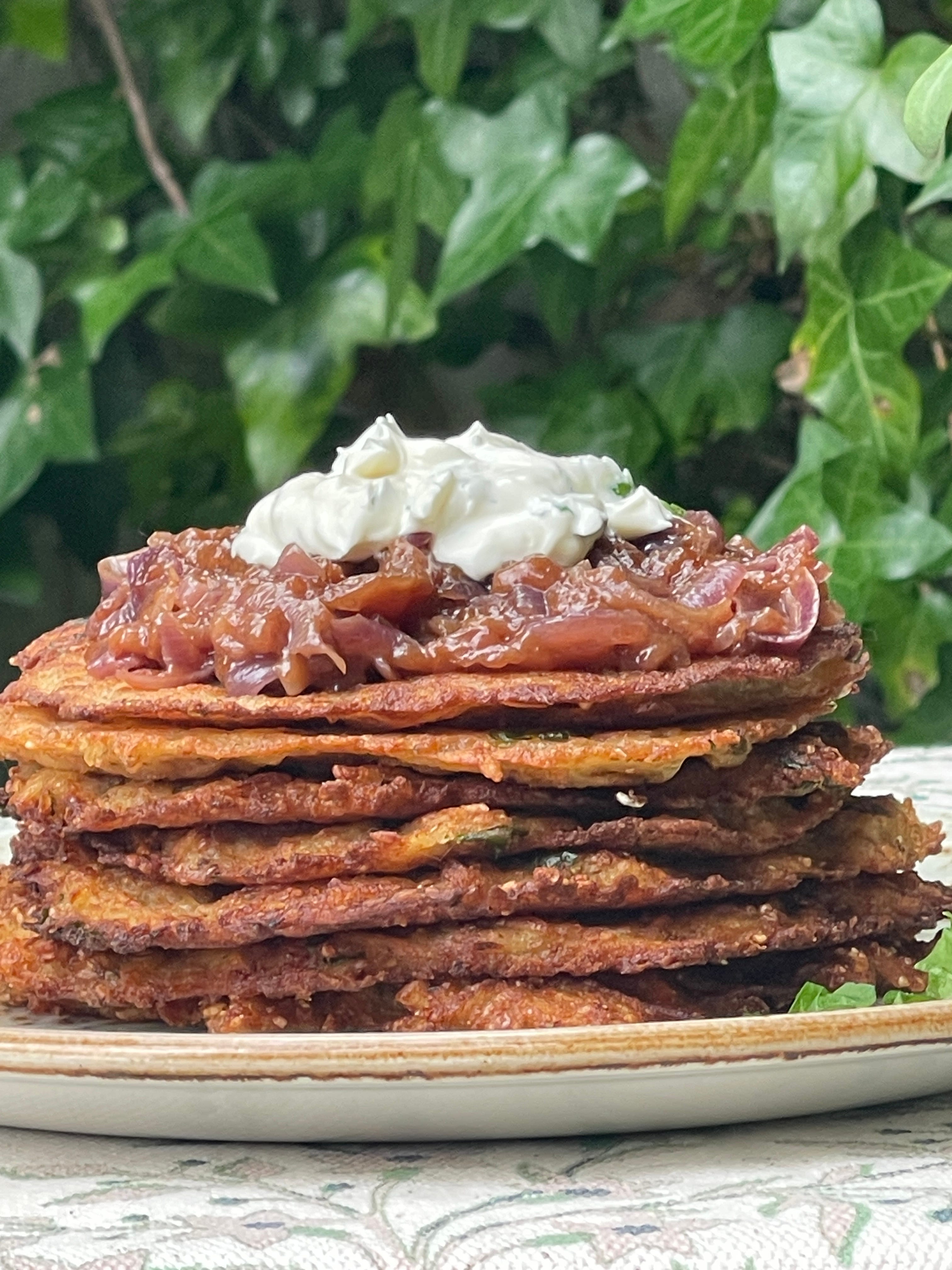
Bramboráky (Czech Garlic Potato Pancakes) with Beer-Caramelized Onions & Herbed Cream
Makes about 12 pancakes
Prep Time: 30 minutes
These crisp, golden potato pancakes are one of the iconic street foods of Masopust, eaten standing up in town squares between dances. They are simple, crispy on the edges, and satisfying, the kind of food that reminds you the best recipes are often the oldest ones. I’ve added a topping of beer-caramelized red onions and a cool dollop of herbed cream that turns them into something you could happily build a meal around. Serve them with a cold Czech lager, as tradition demands. I use whole wheat flour and plant-based milk here, but you can substitute all-purpose flour and regular milk if you prefer, both work well.


For the Pancakes
900 g / 2 lb starchy potatoes (such as Maris Piper or Russet), peeled
1 large egg, beaten
3 tablespoons / 25 g whole wheat flour
4 cloves garlic, finely grated or pressed
1 teaspoon dried marjoram
2 tablespoons fresh parsley, finely chopped, plus more for garnish
1 teaspoon fine sea salt
½ teaspoon freshly ground black pepper
60 ml / ¼ cup plant-based milk
120 ml / ½ cup neutral oil for frying (sunflower or rapeseed)
For the Beer-Caramelized Onions
3 red onions, thinly sliced into half-moons
2 tablespoons butter or olive oil
1 tablespoon brown sugar
120 ml / ½ cup Czech lager or other pale beer
½ teaspoon fine sea salt
For the Herbed Cream
60 ml / ¼ cup Greek yogurt
60 ml / ¼ cup sour cream
½ teaspoon garlic powder
1 tablespoon fresh parsley, finely chopped
Start the onions first. Melt the butter or olive oil in a heavy-bottomed pan over medium heat. Add the sliced red onions and salt and cook, stirring occasionally, until soft and beginning to turn golden, about 20 minutes. Stir in the brown sugar and continue cooking until it dissolves and the onions deepen in colour. Pour in the beer and stir, scraping up any caramelized bits from the bottom of the pan. Reduce the heat to medium-low and let the onions cook gently until the beer has reduced to a sticky glaze and the onions are deeply golden and jammy, another 10 to 15 minutes. Set aside and keep warm.


Make the herbed cream. In a small bowl, stir together the Greek yogurt, sour cream, garlic powder, and parsley until smooth. Season with a pinch of salt. Set aside in the fridge until ready to serve.
Grate and drain the potatoes. Grate the potatoes on the coarse side of a box grater into a large bowl. Tip the grated potato into a clean tea towel and squeeze out as much liquid as possible over the sink. This step is the difference between a crisp pancake and a soggy one. Return the potato to the bowl.
Mix the batter. Add the beaten egg, flour, garlic, marjoram, parsley, salt, pepper, and milk and stir until everything is well combined. The batter should be thick and shaggy, holding together when pressed.
Fry the pancakes. Heat a generous layer of oil in a large heavy skillet (a cast iron is ideal) over medium-high heat. When the oil shimmers, drop heaped tablespoons of the potato mixture into the center of the pan, pressing each one gently with the back of a spatula into a flat round about 9 cm / 3 inches across. Don’t crowd them; work in batches of two or three. Fry for 3 to 4 minutes per side, until deeply golden and crisp at the edges. The garlic will perfume your kitchen in a way that will bring people in from other rooms. Transfer to a plate lined with paper towels and sprinkle with a little extra salt while still hot.
Serve. Stack the pancakes on a plate or serve them individually. Spoon the beer-caramelized onions generously over the top, add a dollop of the herbed cream, and finish with a scattering of fresh parsley. Serve immediately with a cold Czech lager, as tradition demands.
Note: The onions can be made up to a day ahead and gently rewarmed. The pancakes themselves are best eaten immediately, which is no hardship at all.
Let’s Talk!
Please join the What’s Good Here community by posting a comment or to just say hello to get the conversation started!
Image attributions throughout the newsletter are attributed to Jody Eddy, unless otherwise noted.
If you would like to learn more about me and discover what I will deliver to you each week through this newsletter, you can find that information here or check out my Instagram or website.